
Home·Guides·Fixed-Price vs Cost-Plus Contracts
A plain-English comparison of the two main construction contract types for custom homes in Kelowna and the Okanagan, which one protects you from cost overruns, when each makes sense, and the risks hidden in both.
A fixed-price custom home contract commits the builder to a specific total price for defined scope, protecting the homeowner from cost overruns. A cost-plus contract bills the homeowner for actual material and labour costs plus a builder markup (typically 15 to 25 percent), with no price ceiling. For most Kelowna custom builds, fixed-price is the standard and the safer choice for the homeowner.
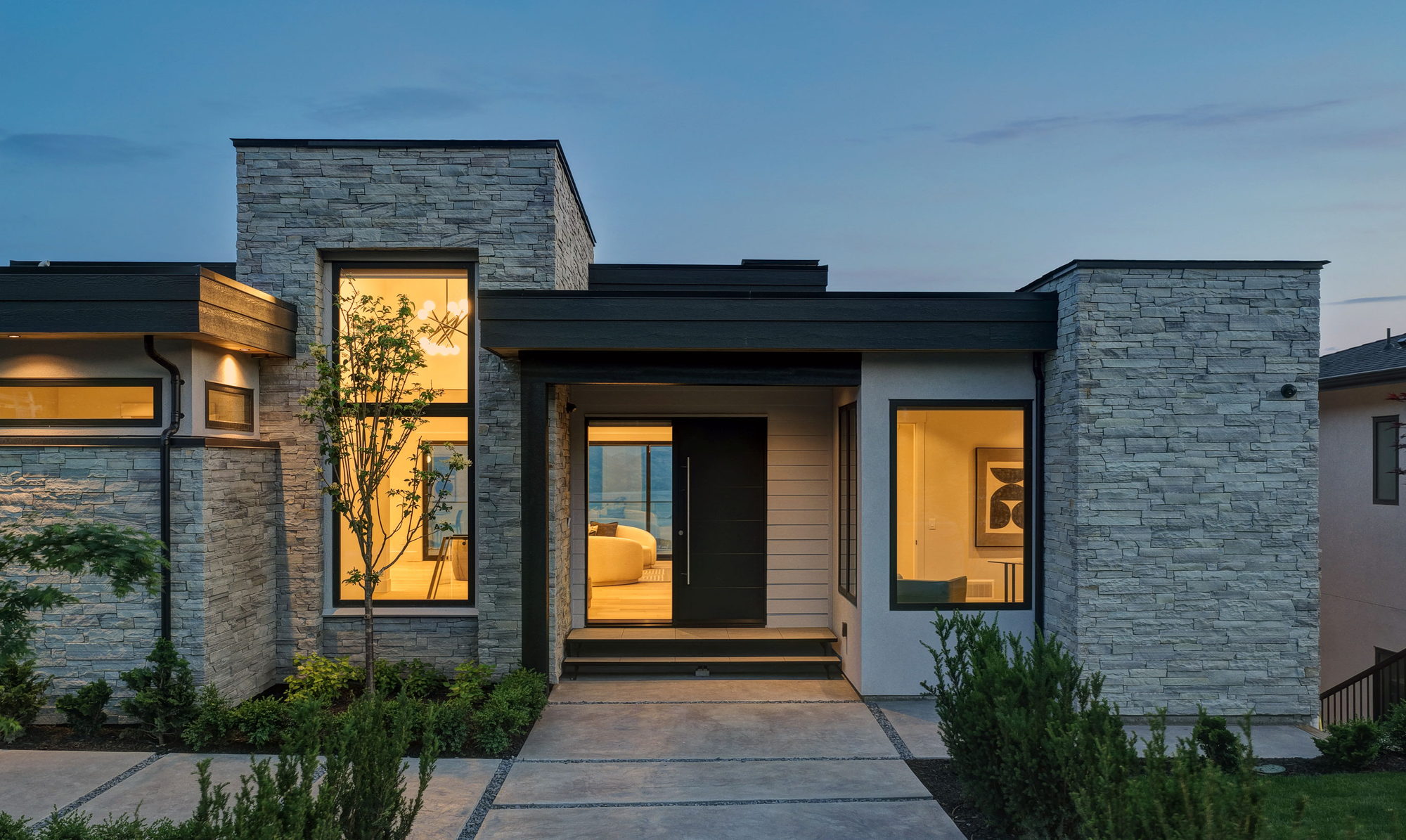
Choosing a construction contract type is one of the first real financial decisions a custom home buyer makes, and it is the one that determines whether the final bill resembles the signed quote. The two main contract structures in British Columbia residential construction are fixed-price and cost-plus. The difference between them is who carries the cost risk.
A fixed-price contract (sometimes called a lump-sum or stipulated-sum contract) commits the builder to deliver a defined scope of work for a specific price. The builder absorbs cost overruns on anything that is in scope and priced. If a trade comes in higher than the builder estimated, that is the builder's problem, not the homeowner's.
For a fixed-price contract to work fairly, three things need to be true:
When these three conditions are met, a fixed-price contract gives the homeowner a defensible budget to make financing, insurance, and planning decisions on.
A cost-plus contract bills the homeowner for actual costs incurred by the builder (materials, labour, subcontractor invoices) plus a markup, typically expressed as a percentage of those costs. There is no price ceiling. If the actual cost of the build runs 40 percent over initial estimates, the homeowner pays 40 percent over initial estimates. The builder's markup is calculated on the final cost, so the builder's compensation can increase if the project runs over.
The structural problem with cost-plus is the misaligned incentive. In a fixed-price contract, the builder is motivated to control cost because overruns come out of the builder's margin. In a cost-plus contract, the builder is paid a percentage of total cost, so cost increases can increase the builder's payment.
| Factor | Fixed-price | Cost-plus |
|---|---|---|
| Who carries cost overrun risk | Builder | Homeowner |
| Price certainty before construction | High (if scope is detailed) | Low (estimate only, no ceiling) |
| Builder incentive on cost control | Aligned (overruns reduce builder margin) | Mixed (overruns can increase builder markup dollars) |
| Time to prepare the contract | Longer (detailed scoping required) | Shorter (less upfront detail) |
| Flexibility to change scope mid-build | Change orders required | Easier (just invoiced) |
| Financing lender comfort | Strong (fixed total) | Weaker (no fixed total) |
| Best for | Most residential custom builds | Highly unusual scope or research-phase builds |
Fixed-price is only fair to both sides if the scope and allowances are detailed. The common failure modes:
"Flooring allowance: $8,000" with no indication of what quality that buys. The homeowner picks flooring, gets a change order for $14,000 because the quoted allowance covered contractor-grade only. Honest fixed-price contracts specify allowance ranges with examples ("tile allowance $45 per square foot, examples: X, Y, Z product lines").
The quote excludes landscaping, driveway, septic, well, geotechnical, or site surveys without flagging it clearly. The homeowner thinks the fixed price covers everything and finds out at completion that it did not.
A builder who provides a lowball fixed-price and plans to make up margin through change orders during construction has effectively sold a cost-plus contract disguised as fixed-price. Expect every reputable Kelowna builder to issue change orders for genuine mid-build changes, but a build that generates 20 to 30 change orders without the homeowner driving the changes is a bad sign.
Cost-plus is not inherently wrong. It is the appropriate structure for a narrow set of situations:
For a standard residential custom home on a defined lot in the Okanagan, none of these conditions typically apply. If a builder is pushing cost-plus for a standard custom build, ask directly why fixed-price is not an option. A good answer involves specifics about scope that genuinely cannot be scoped. A vague answer is a flag.
When reviewing a fixed-price custom home quote in Kelowna, run through this checklist before signing:
A quote that answers all of these clearly is a quote you can compare against other quotes meaningfully. A quote that leaves any of them vague is not actually a fixed-price contract. It is a soft estimate dressed up as one.
Every Palermo Homes project in the Okanagan runs on a fixed-price contract with transparent allowances and documented change orders. We do not run cost-plus residential builds. For most of our clients, this means the number signed at contract is the number paid at completion, with any variations coming only from change orders the homeowner specifically requested in writing.
On our Cabernet Way project, the final cost landed within 2 percent of the signed contract, with the variance driven by a late-stage client request to upgrade the primary bathroom tile package. That change order was priced, written up, and signed before the tile was ordered. On our Malbec Place project, the final cost matched the signed contract exactly because no mid-build scope changes were requested.
"We lose some clients because we insist on fixed-price. They go to a builder quoting cost-plus with a lower starting number and come back a year later asking what we would charge to finish. Fixed-price is harder to sell upfront and better to live with for the next 18 months." Jaspal Sidhu, Owner, Palermo Homes
Our guide to choosing a custom home builder in Kelowna covers the seven verification criteria to run on any Kelowna builder before signing anything, including the fixed-price versus cost-plus question in context. Our custom home cost guide explains how to budget for a Kelowna custom home before you request fixed-price quotes. Our timeline guide covers how long the design, permits, and construction phases take.
Palermo Homes is a custom home builder based in West Kelowna, BC (BC Corporate Registration BC1017682, BC Housing Licensed Residential Builder Number 42812). We have been building custom homes and whole-home renovations across the Okanagan Valley and Lower Mainland for over 15 years. Every project runs on a fixed-price contract with transparent allowances and documented change orders.
We build in Kelowna, West Kelowna, Lake Country, Peachland, Penticton, Vernon, and select Lower Mainland communities. More about the owner and the approach is on the Jaspal Sidhu bio page.
Tell us about your lot, scope, and finish priorities. We will scope it in detail and give you a defensible fixed-price quote.
Start a conversation