
Home·Guides·Financing a Custom Home in BC
How custom home construction financing actually works in British Columbia. Progress draw schedules, the BC-specific 10% holdback requirement, down payment realities, construction-to-permanent vs stand-alone loan structures, and what lenders need to see before approval.
A BC construction mortgage releases funds in 4 to 5 stages (draws) as construction progresses, requires 20% to 25% down (sometimes more), carries interest rates 1% to 3% above conventional mortgages, and runs 12 to 18 months before converting to or being replaced by a permanent mortgage. BC's Builders Lien Act requires a 10% holdback on every draw payment, released about 55 days after substantial completion. Lot equity typically counts toward down payment, and most lenders require a BC-licensed residential builder on the contract.
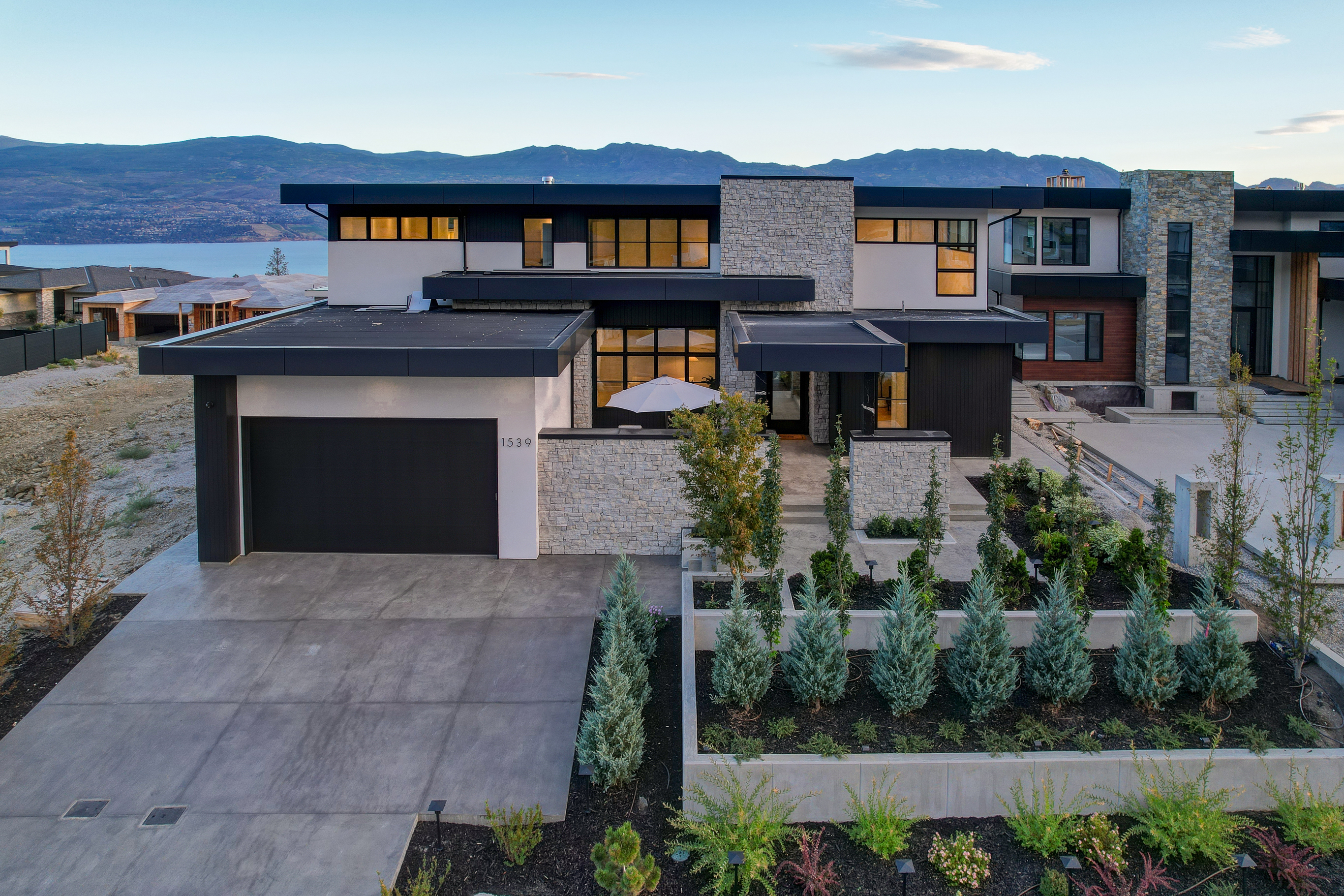
Financing is often the most confusing part of planning a custom home for buyers who have only ever bought resale properties. A traditional mortgage lands the full purchase price in one closing. A construction mortgage releases funds in stages tied to physical progress, with inspectors verifying the work before each release and a BC-specific holdback requirement that most national financing guides miss entirely.
This guide walks through how construction financing actually works in British Columbia: the draw schedule, the 10% Builders Lien Act holdback, down payment realities, loan structure choices, interest costs during the build, and the documentation lenders require. It is written as an educator's walkthrough, not financial advice. For specific numbers and terms, work with a licensed BC mortgage broker or your lender.
A traditional residential mortgage closes on an existing property. The lender appraises the home as it stands today, and the full loan amount is advanced at closing. The borrower starts making principal and interest payments immediately.
A construction mortgage closes before the home exists. The lender appraises the home on an "as-if-complete" basis using the design drawings, specification sheet, and builder contract. Funds are advanced in stages as the home is built. The borrower makes interest-only payments on the amounts actually drawn, not on the full approved amount. Once construction is complete and the occupancy permit is issued, the construction mortgage converts to or is replaced by a conventional amortizing mortgage.
| Traditional residential mortgage | Construction mortgage | |
|---|---|---|
| Advance structure | Full amount at closing | Staged draws tied to construction milestones |
| Payment type | Principal + interest from day 1 | Interest-only on drawn amounts during build |
| Term | Typically 1 to 10 years (fixed or variable) | 12 to 18 months, converts or renews at completion |
| Minimum down payment | 5% (insured) to 20% (uninsured) | 20% to 35%+ |
| Interest rate | Current prime +/- lender spread | Conventional rate + 1% to 3% premium |
| Appraisal basis | Current market value of existing home | As-if-complete value based on plans + specs |
| Inspections required | None during the loan | Draw inspection before each advance |
Most BC construction mortgages use a 4 or 5 draw schedule tied to defined construction milestones. The exact percentages and milestones vary by lender, but the common structure looks like this:
Site preparation + foundation complete
Excavation, foundation pour, waterproofing, perimeter drainage, backfill, and underslab services complete. Draw inspector confirms work.
Framing complete
Structural framing (floors, walls, roof), roof sheathing, windows and exterior doors installed. House is enclosed to the elements.
Lock-up (weather-tight shell)
Exterior finished (siding or stone), roofing complete, insulation and vapour barrier installed, rough mechanical / electrical / plumbing complete.
Interior substantially complete
Drywall, flooring, cabinetry, tile, trim, and most fixtures installed. Interior painting complete.
Final completion + occupancy
Final inspection passed, occupancy permit issued, exterior and landscape finishing complete.
Before each draw is released, the lender sends an inspector or appraiser to the site to verify the work has been completed to the stated milestone. The inspector files a draw report, and the funds are released from the lender to the borrower (or directly to the builder, depending on the arrangement) within a few business days.
BC-specific rule
Section 4 of BC's Builders Lien Act requires the owner (or the owner's lender on behalf of the owner) to hold back 10% of every progress payment made to the builder throughout construction. This holdback protects subcontractors and material suppliers who may have unpaid claims. The holdback is released approximately 55 days after substantial completion, provided no liens are filed.
In practical terms, on a $1.5 million construction mortgage with the typical 5-draw structure, the builder actually receives $150,000 less than the gross draw amounts across the build. That $150,000 sits in holdback until the lien period expires. If a subcontractor files a lien during the 45-day lien period after substantial completion, the holdback is used to settle the claim before being released.
This is a BC-specific requirement that most national construction financing guides either overlook or misdescribe. It affects how the builder structures cash flow, how trades are paid, and in rare cases how long the final draw takes to fully release. A licensed BC builder is familiar with the holdback mechanics and will not be surprised by them. An out-of-province contractor or an owner-builder without construction experience often is.
Most BC construction mortgages require 20% to 25% down. Some lenders require up to 35% depending on the project profile, borrower credit, and lender appetite for the specific build type (standard custom home vs hillside vs unusual design vs owner-builder).
Lot equity counts toward down payment. If you own a lot free and clear worth $500,000 and the total project value is $2,000,000, your lot equity represents 25% of the project. Many lenders will treat that as the down payment and lend the remaining $1,500,000 as the construction mortgage.
If you still have a mortgage on the lot, the lender will consider the net equity. A $500,000 lot with a $200,000 lot mortgage leaves $300,000 of equity, which may or may not be sufficient depending on lender requirements.
For buyers purchasing both the lot and funding construction, the down payment is typically a combination of lot purchase cash and additional cash held in reserve. Lenders want to see the down payment is actually in the borrower's bank account at the time of application, not borrowed from another source.
A CTP mortgage combines the construction loan and the end mortgage into a single loan. One application, one closing, one set of legal fees. The loan starts in construction mode (interest-only draws), and automatically converts to standard amortizing mortgage mode once the home is complete and the final draw is released. This is the simpler and typically lower-total-cost option for most custom home buyers in BC.
A stand-alone construction loan is a short-term loan that funds only the construction phase. Once the home is complete, the borrower takes out a separate traditional mortgage (potentially from a different lender) to pay off the construction loan. Stand-alone loans sometimes offer slightly better construction-phase rates but require a second round of underwriting, legal fees, and appraisal at the end. They can make sense for borrowers who want to shop multiple lenders for the end mortgage or who expect their borrower profile to change significantly between the start and end of construction.
Construction mortgage interest is charged only on amounts actually drawn, not on the full approved amount. During a staggered 12 to 15 month build, interest costs accumulate month over month as more funds are released.
A rough estimate on a $1.5 million construction mortgage with a 5-draw schedule, average interest rate of 7.5%, and a 13 month build:
Actual interest costs vary significantly with the actual rate at the time, draw timing, project duration, and whether lot equity is used to reduce the drawn amounts. Interest-only payments during construction are made from the borrower's own funds (not from the loan), so budget cash flow accordingly. Some lenders allow interest to be capitalized into the loan, with interest costs added to principal, though this reduces the available construction budget.
A typical BC construction mortgage application requires:
The lender's appraiser will perform an as-if-complete appraisal based on the plans, specifications, and local market data to confirm the completed home will be worth at least the loan amount plus the down payment. If the appraisal comes in below expectations, the loan amount may be reduced or additional down payment required.
Most lenders will not fund a construction mortgage without a BC-licensed residential builder on the contract (or an approved Owner-Builder Exemption). The reasons:
Palermo Homes is BC Housing Licensed Residential Builder Number 42812 and holds BC Corporate Registration BC1017682. Our contracts, warranty registrations, and documentation are structured to support lender due diligence and typically clear construction mortgage approval conditions without issue.
Owner-builders in BC must apply for and receive an Owner-Builder Exemption from BC Housing (which waives the mandatory 2-5-10 warranty). Lenders view owner-builder projects as higher risk because there is no licensed general contractor managing cost and schedule. In practice, owner-builder construction loans typically require:
Some lenders decline owner-builder construction loans entirely. For most buyers, working with a licensed builder results in better financing terms, fewer surprises during the build, and the 2-5-10 warranty protection that follows the home after completion.
Here is how construction financing sequences against the overall custom home build phases covered in our process guide:
| Project phase | Financing step |
|---|---|
| Initial consultation | Rough budget range confirmed; initial mortgage broker conversation |
| Lot evaluation | Lot purchase financing or lot equity confirmation |
| Design (early) | Mortgage pre-approval conversation to confirm borrowing capacity |
| Design (late) + permit prep | Formal construction mortgage application submitted with full package |
| Permit issuance | Mortgage approval conditions cleared, financing commits |
| Site prep + foundation | Draw 1 released after inspection |
| Framing | Draw 2 released |
| Lock-up | Draw 3 released |
| Interior finishing | Draw 4 released |
| Final inspections + occupancy | Draw 5 released; CTP mortgage converts to amortizing; or stand-alone loan paid off by new mortgage |
| 55 days post-completion | Builders Lien Act holdback released |
Palermo Homes is a custom home builder based in West Kelowna, BC (BC Corporate Registration BC1017682, BC Housing Licensed Residential Builder Number 42812). Our contracts, warranty registrations, cost breakdowns, and construction documentation are structured to support construction mortgage approval and draw administration with BC lenders. We work regularly with mortgage brokers and lending teams across the Central Okanagan.
We build in Kelowna, West Kelowna, Lake Country, Peachland, Penticton, Vernon, and select Lower Mainland communities.
For the cost side of the equation, see our custom home cost guide. For how long the project runs across all draws, see the timeline guide. For the step-by-step process financing supports, see the process guide. For contract structure (which lenders care about), see the fixed-price vs cost-plus guide.
Our contracts, cost breakdowns, and warranty registrations are structured to clear construction mortgage approval conditions without surprises.
Book a consultation